
Corrective Jaw Surgery: More Than a Cosmetic Change
Corrective jaw surgery (orthognathic surgery) repositions the upper and/or lower jaws so the teeth and facial skeleton work together in a stable, healthy way. When the jaws are misaligned, patients may struggle with chewing, speaking, breathing, or confidence in their appearance, even if their teeth look straight.
What Jaw Surgery Addresses
Common reasons to consider jaw surgery include chronic difficulty chewing, front or open bites that do not meet, asymmetry between the right and left sides of the face, and jaw positions that contribute to TMJ pain or headaches. Some patients also develop speech issues or airway narrowing because the jaws sit too far back or forward, and orthognathic surgery can help restore a more efficient relationship between the teeth, jaws, muscles, and airway.
Although the primary goal is functional (restoring a stable, comfortable bite), the change in jaw position often produces a noticeable improvement in facial profile and symmetry. Patients commonly report that they feel more confident in their smile and facial appearance after surgery, because the lips, chin, cheeks, and nose now align with the underlying skeletal framework in a more harmonious way.
Digital Planning in Modern Orthognathic Surgery
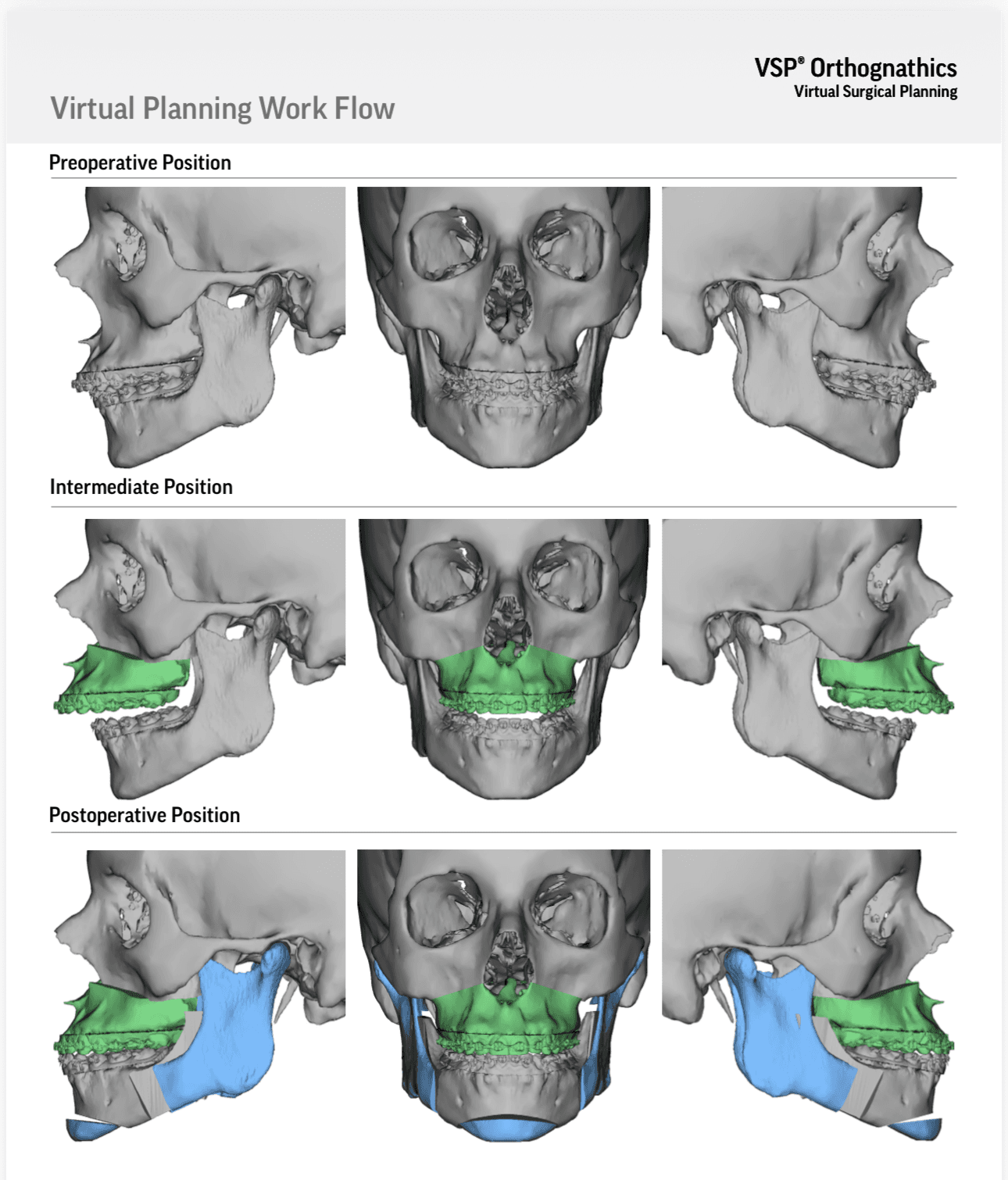
Contemporary jaw surgery relies on digital dentistry tools: advanced imaging, virtual surgical planning, and computer-guided splints, to increase precision and predictability. Instead of relying only on traditional mechanical measurements, surgeons can simulate jaw movements in three dimensions and see how different plans affect the bite and facial soft tissues before a single incision is made.
High-resolution scans and digital models allow the surgeon to measure distances, angles, and occlusion relationships to fractions of a millimetre, then translate that plan into custom guides used during surgery. This level of planning reduces intra-operative guesswork and makes it easier to achieve the intended jaw position, especially in complex multi-segment procedures.
From the patient's perspective, a digital planning workflow means clearer explanations, visual previews of likely results, and a more streamlined experience from consultation through surgery. Many practices use this technology to walk patients through before-and-after simulations, discuss realistic expectations, and coordinate orthodontic treatment around the surgical plan.
Capture
High-resolution scans and digital models record the teeth, jaws, and facial skeleton in three dimensions.
Simulate
Jaw movements are planned virtually to preview the bite result before any incision is made.
Guide
The plan becomes custom splints and surgical guides that translate it precisely into the operating room.
Jaw Surgery and Obstructive Sleep Apnea
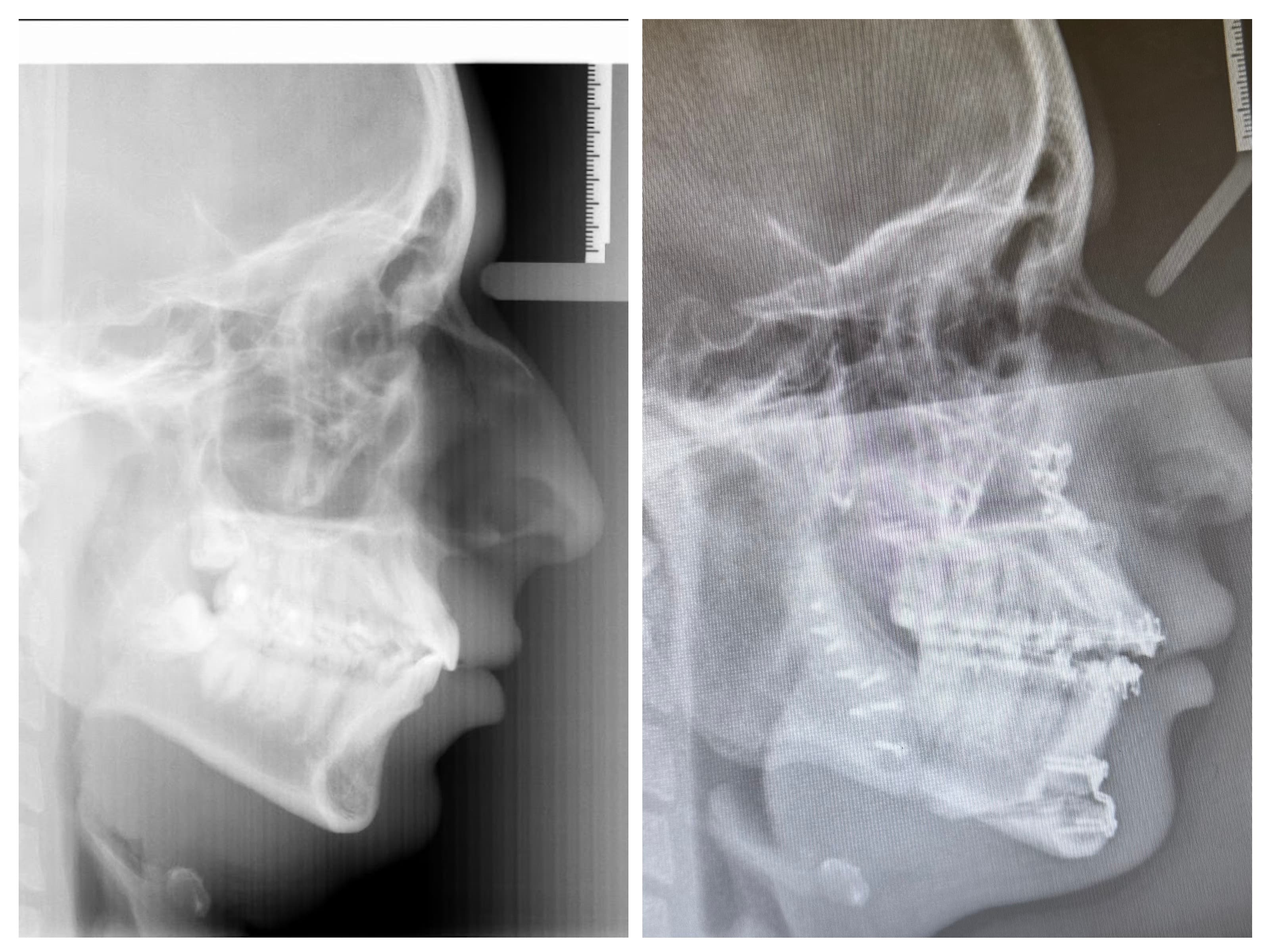
For patients with severe obstructive sleep apnea where conservative treatments have not produced adequate results, a specific procedure called maxillomandibular advancement (MMA) can significantly enlarge the airway. In MMA, the surgeon moves the upper and lower jaws forward so the tongue and soft tissues no longer collapse backward and block the throat during sleep.
Bringing the jaws forward pulls the attached soft tissues and tongue base away from the back of the throat, creating more space for airflow. This skeletal change can reduce the frequency and severity of apneic episodes by addressing the structural cause of airway collapse, rather than only managing symptoms.
Candidates for MMA typically have documented obstructive sleep apnea, anatomic features such as a retruded jaw or narrow airway, and either poor tolerance or an incomplete response to CPAP or oral appliances. A thorough evaluation (including sleep studies, imaging, and multidisciplinary consultation) is essential to determine whether jaw surgery is appropriate and how it should be coordinated with other medical care.
Recovery After Jaw Surgery: Timelines and Milestones
Recovery from jaw surgery is a staged process. Many of my patients go home the same day or the following morning after surgery. The bones are generally fused and fully stable by the six-week mark, though it can take up to 9 to 12 months for all bone remodeling, soft tissue adaptation, and numbness to fully subside.
In the first days after surgery, swelling, bruising, and fatigue are common. Most of my patients follow a modified diet and activity plan while the jaws begin to stabilize. I typically have patients on a soft food diet as early as 24 hours after surgery. Most patients can return to light work or school after the first week or two.
For more physically demanding activity, I instruct my patients to wait until our six-week follow-up appointment. At that point, if everything looks well, they are cleared to return to sports and more strenuous activity. Follow-up visits are used to monitor bite position, joint comfort, and facial symmetry, and to adjust orthodontic appliances or elastics as needed.
The recovery arc
Home the same day or the following morning. Swelling and fatigue begin. Jaw bra worn 24/7. Staying on top of prescribed medications is crucial.
Swelling and discomfort at their peak. Rest, fluids, and calories are crucial. Patients may begin a soft food diet.
Swelling and discomfort noticeably subsiding day by day. Light activity in the form of short walks encouraged. Jaw bra now worn nights only. Antibiotics should be finished. Prescribed medications taken as needed.
Majority of swelling and discomfort has subsided. Patients return to day-to-day life. Prescribed medications no longer needed. Soft food diet and light, non-strenuous exercise still encouraged.
Follow-up appointment to monitor results and bite. Post-operative orthodontic work begins. Chewing is reintroduced. Only minor swelling remains. Cleared for sports and strenuous activity if everything looks well.
Most visible swelling and numbness have subsided. Most patients go about their everyday lives without recognizing that they underwent any procedure.
All bone remodeling, soft tissue adaptation, and residual numbness fully resolve into a stable, comfortable final result.